Living Shelter
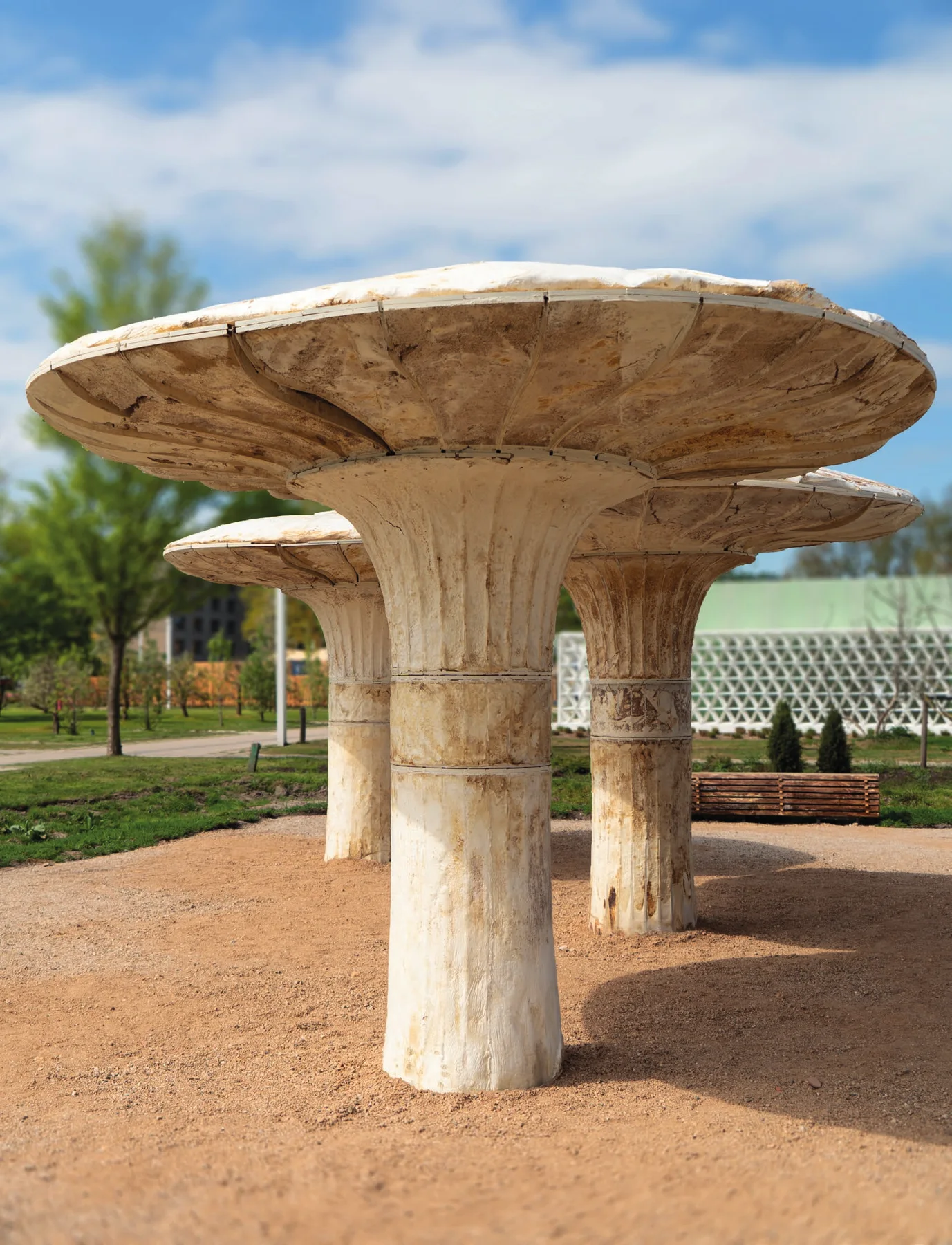
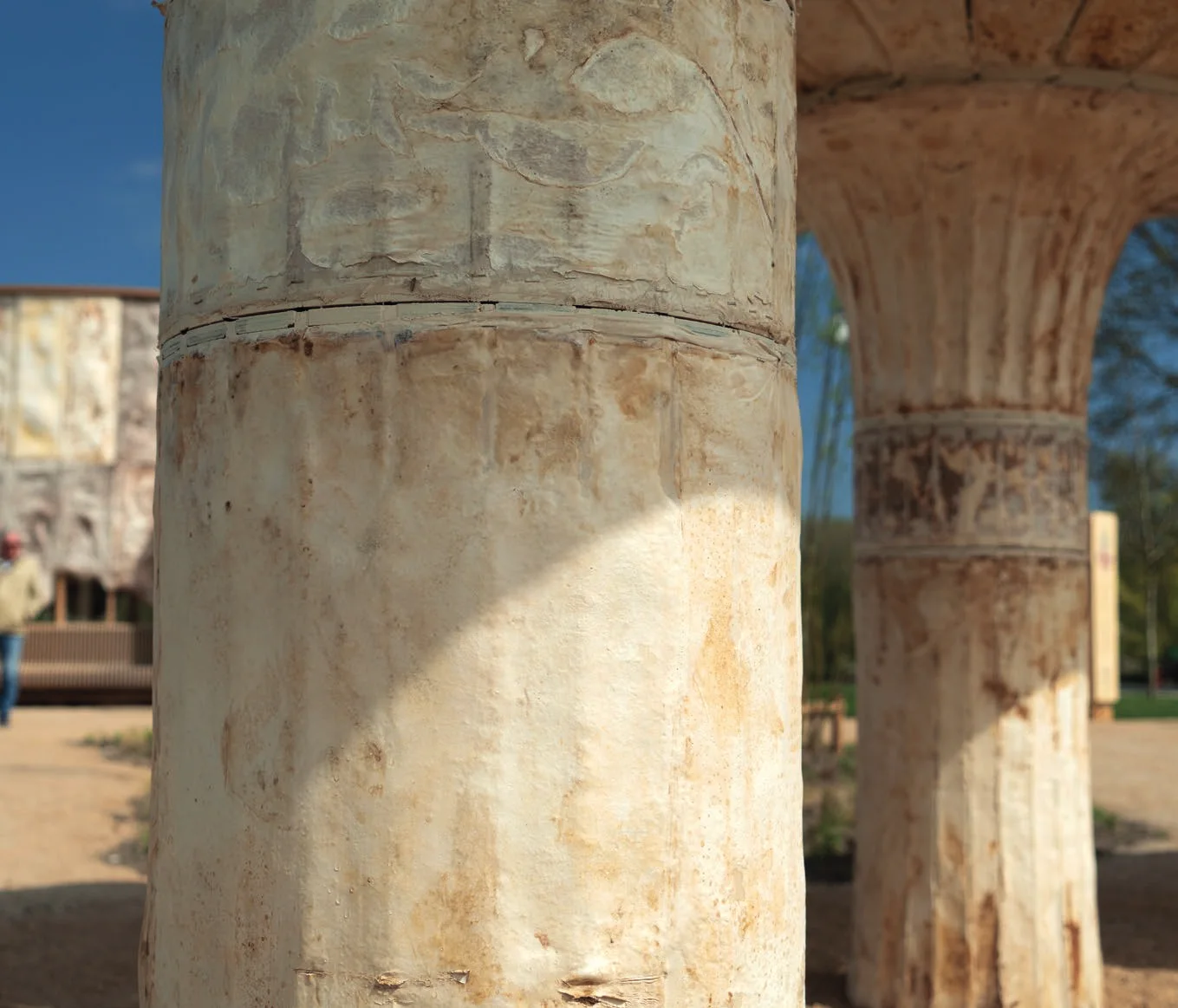
Three grown mushroom structures, each about 3.5 metres tall, made possible by a mould that became part of the finished work.
- Year
- 2022
- Location
- Mycelium Parc · Floriade Expo 2022, Almere, Netherlands
- Materials
- Mycelium composite, laser-cut wooden skeleton and fabric
- Credits
- Studio Cartier
- Status
- Exhibited outdoors · Floriade Expo 2022, Almere, April–October 2022
- Structures
- 3
- Height
- ≈ 3.5 m
- Diameter
- ≈ 3 m
- Weight
- ≈ 350 kg
- Outdoors
- 6 months
Height, diameter and weight are approximate, per structure.
Mushrooms the size of a room.
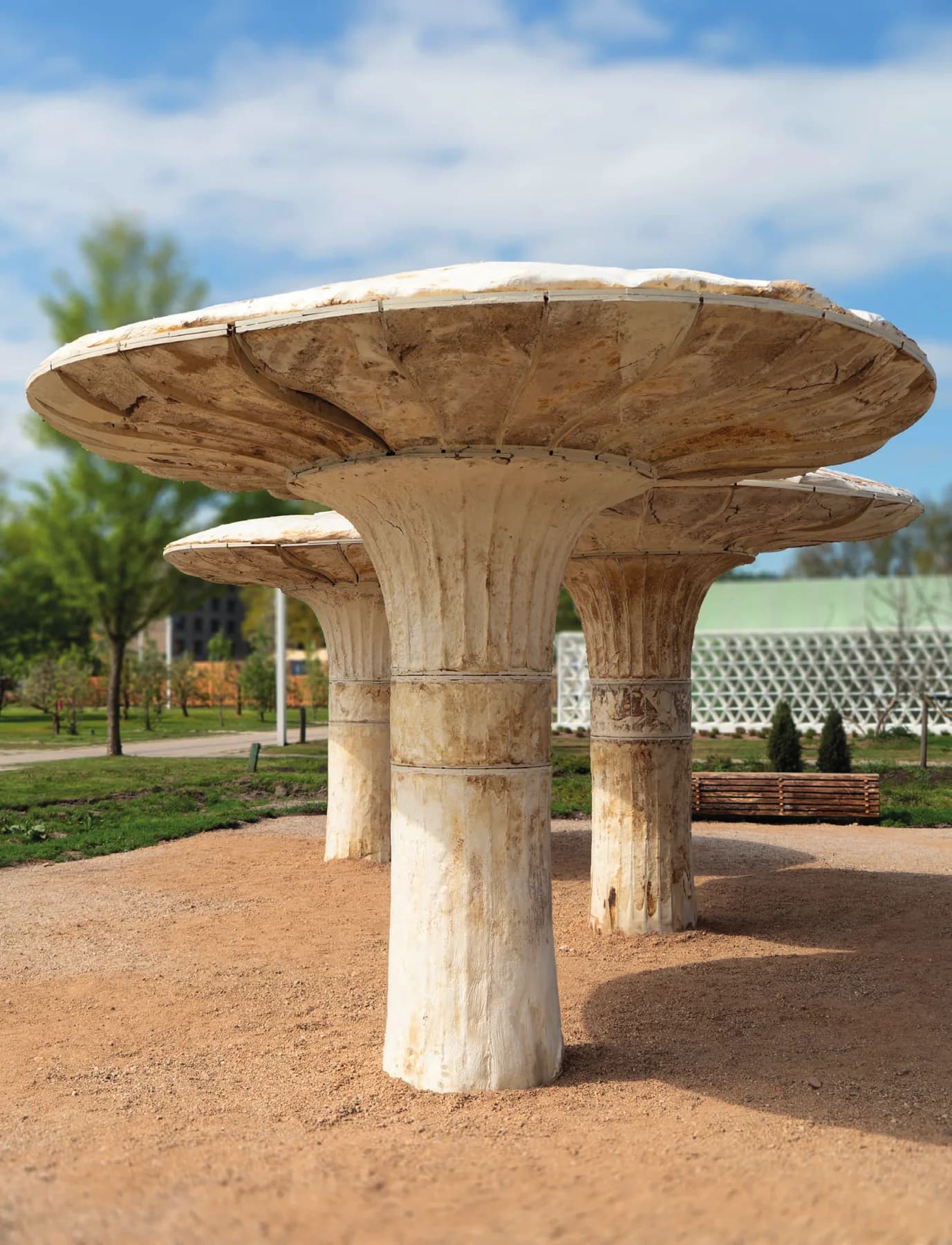
Living Shelter is a group of three giant mushroom-shaped structures, each about 3.5 metres high and 3 metres in diameter, and each weighing around 350 kilograms. Their silhouette draws on the clouded agaric, Clitocybe nebularis, whose broad caps cast a sheltering shade.
At this scale, conventional mould-making was impractical. Grown materials are usually shaped in a rigid mould that is removed once the material has grown; for a column and a three-metre cap, that approach no longer worked.
A skeleton that stays inside.
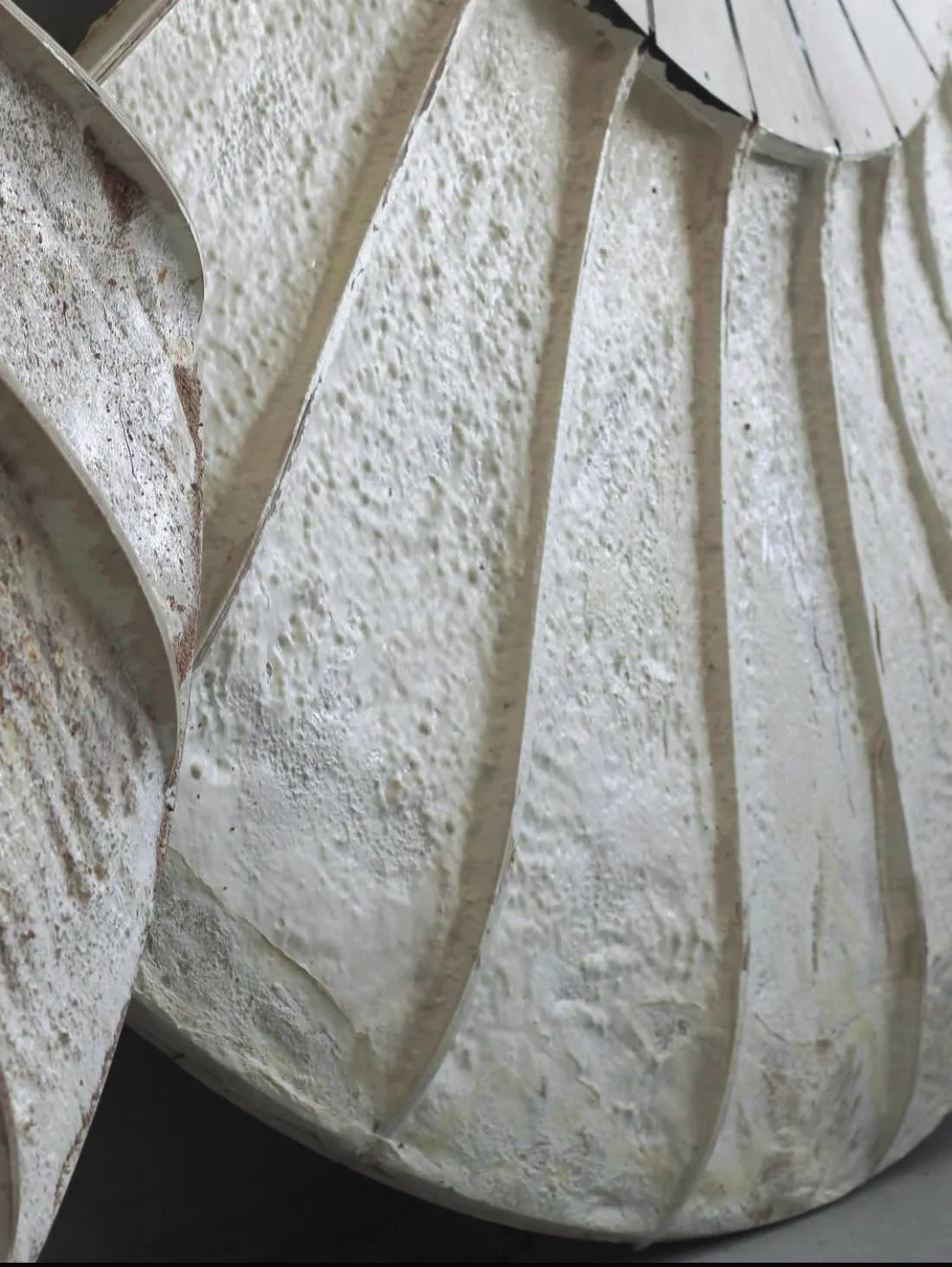
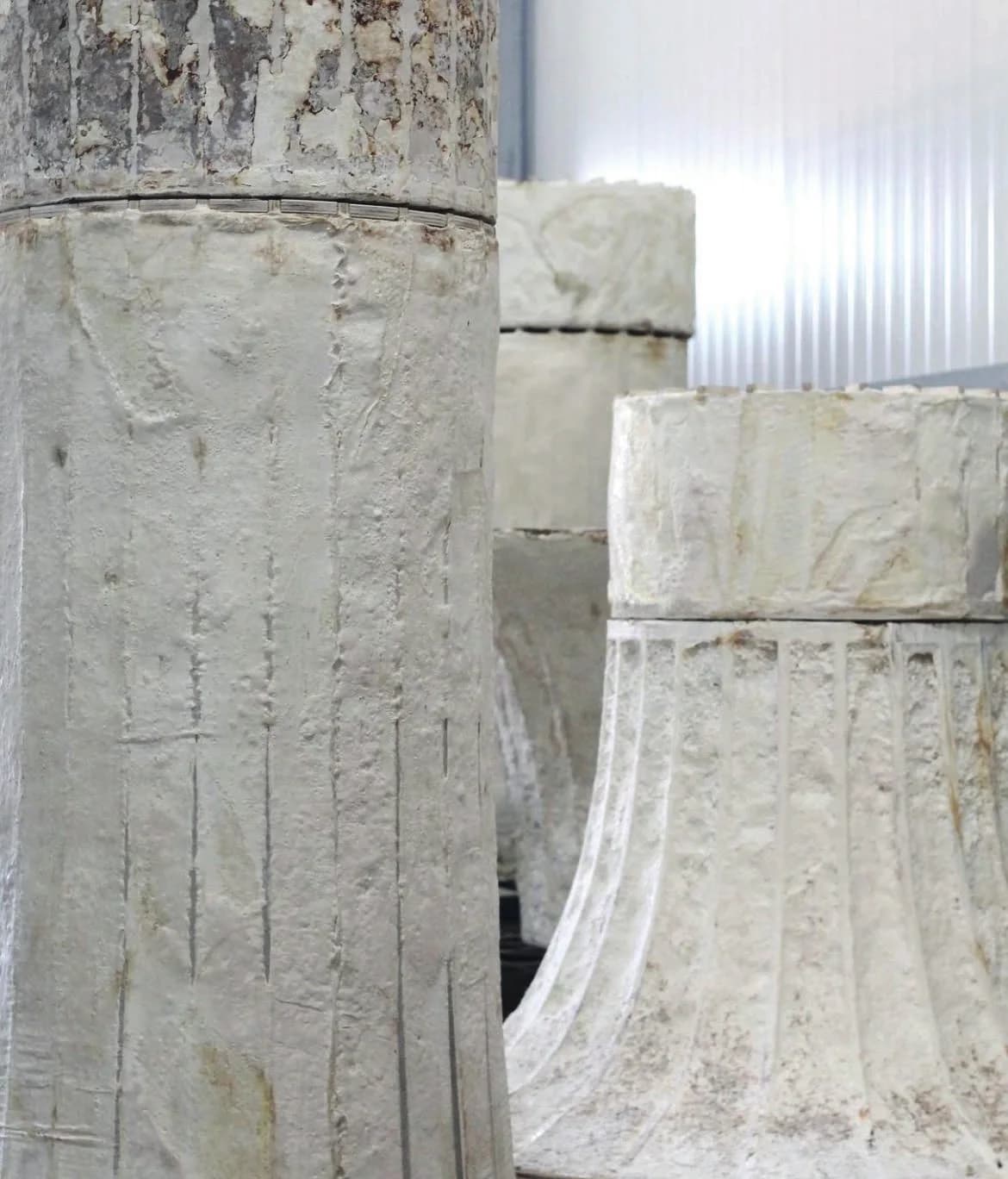
The studio developed a laser-cut wooden skeleton combined with fabric. The skeleton gives each column and cap its structure and profile. The fabric, fixed over it, forms the envelope that contains the material during fabrication.
When the material has grown, nothing is taken away. Skeleton and fabric remain inside the work and become part of the finished design. The mould is no longer a temporary tool but the backbone of the object, and that is what made structures of this size possible.
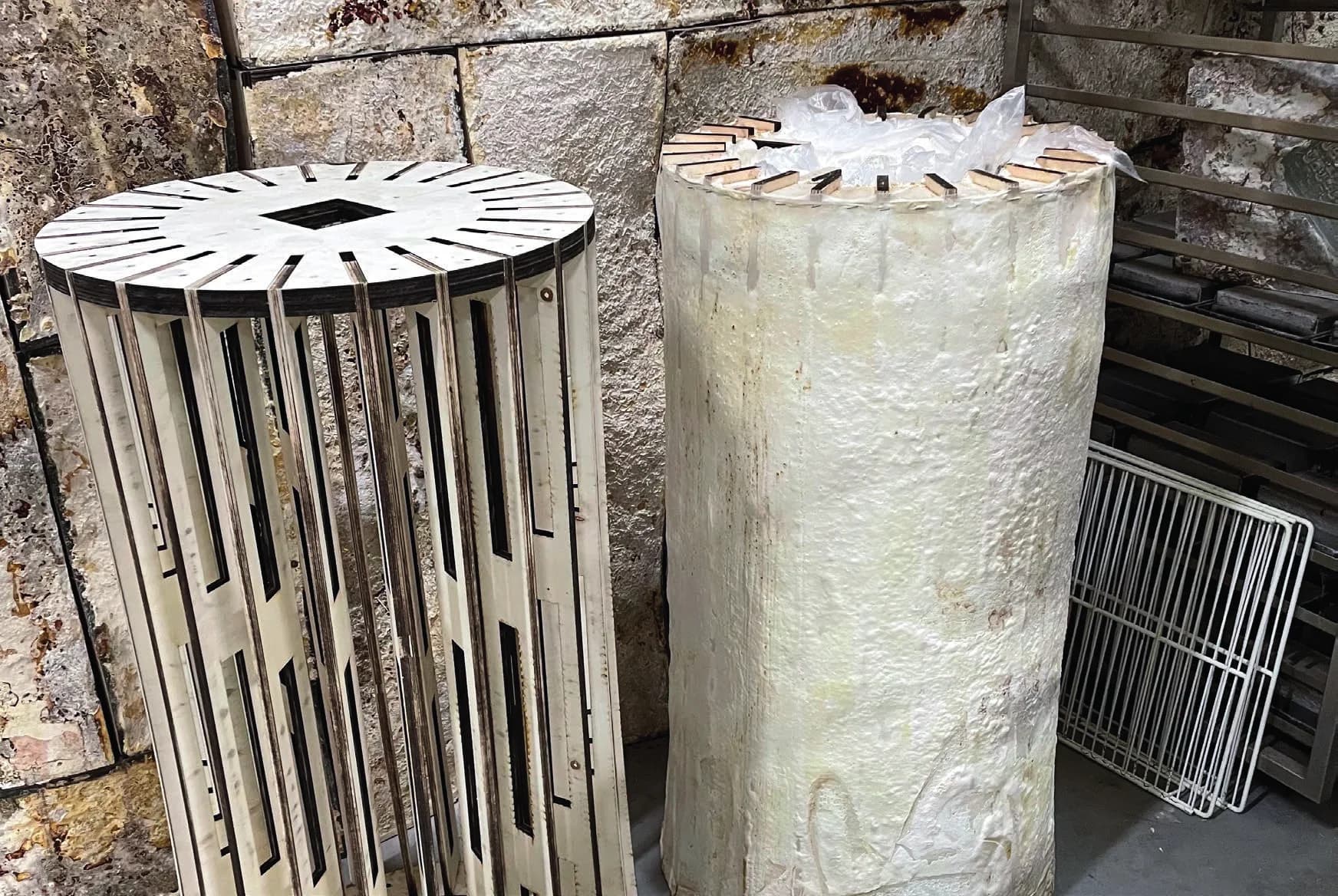
Frame, fabric, material, form.
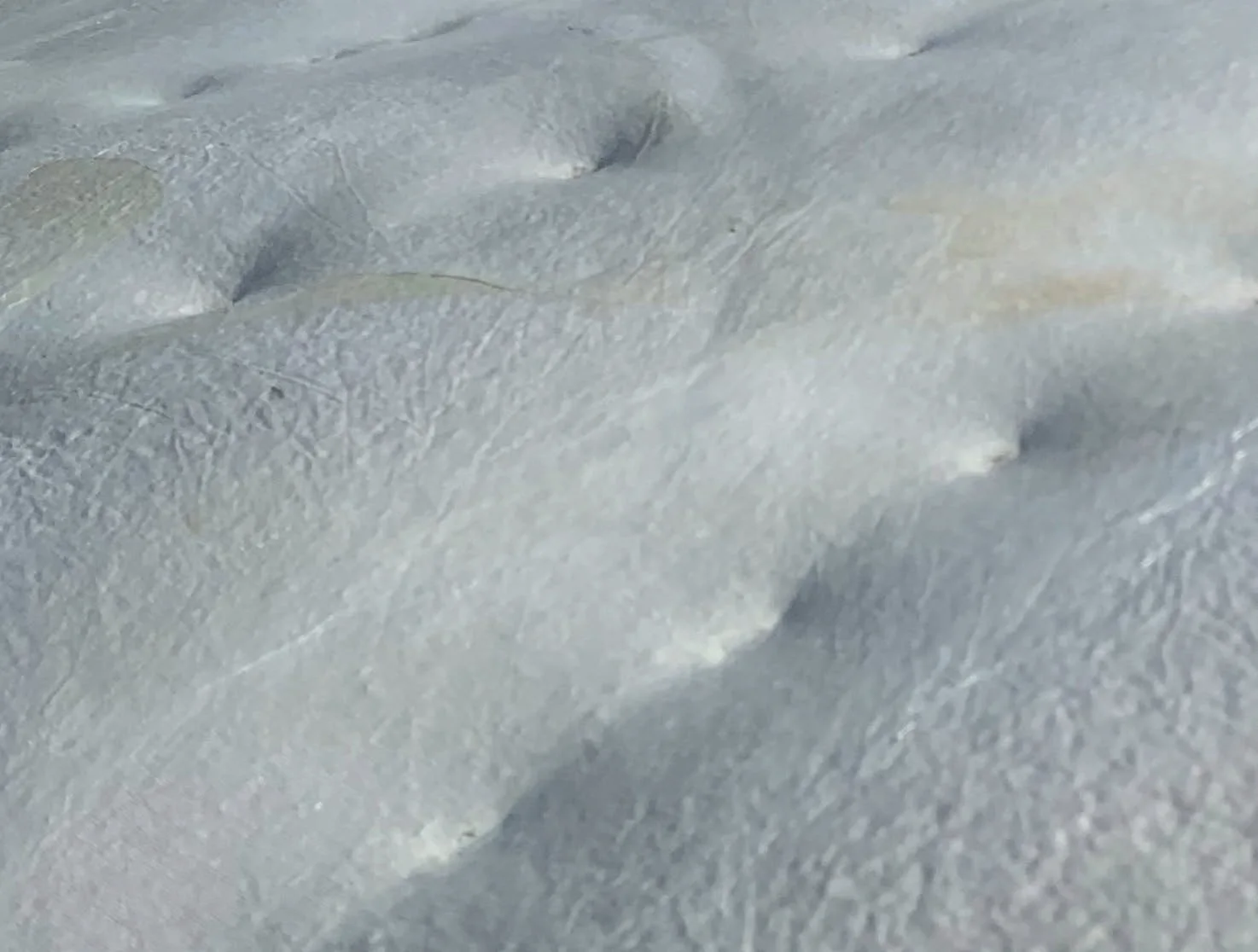
Fabrication followed the same sequence for every element: the laser-cut frame, the fabric envelope fixed to it, and the mycelium composite packed in between the ribs. The photographs show each step, through to a finished column lifted into place.
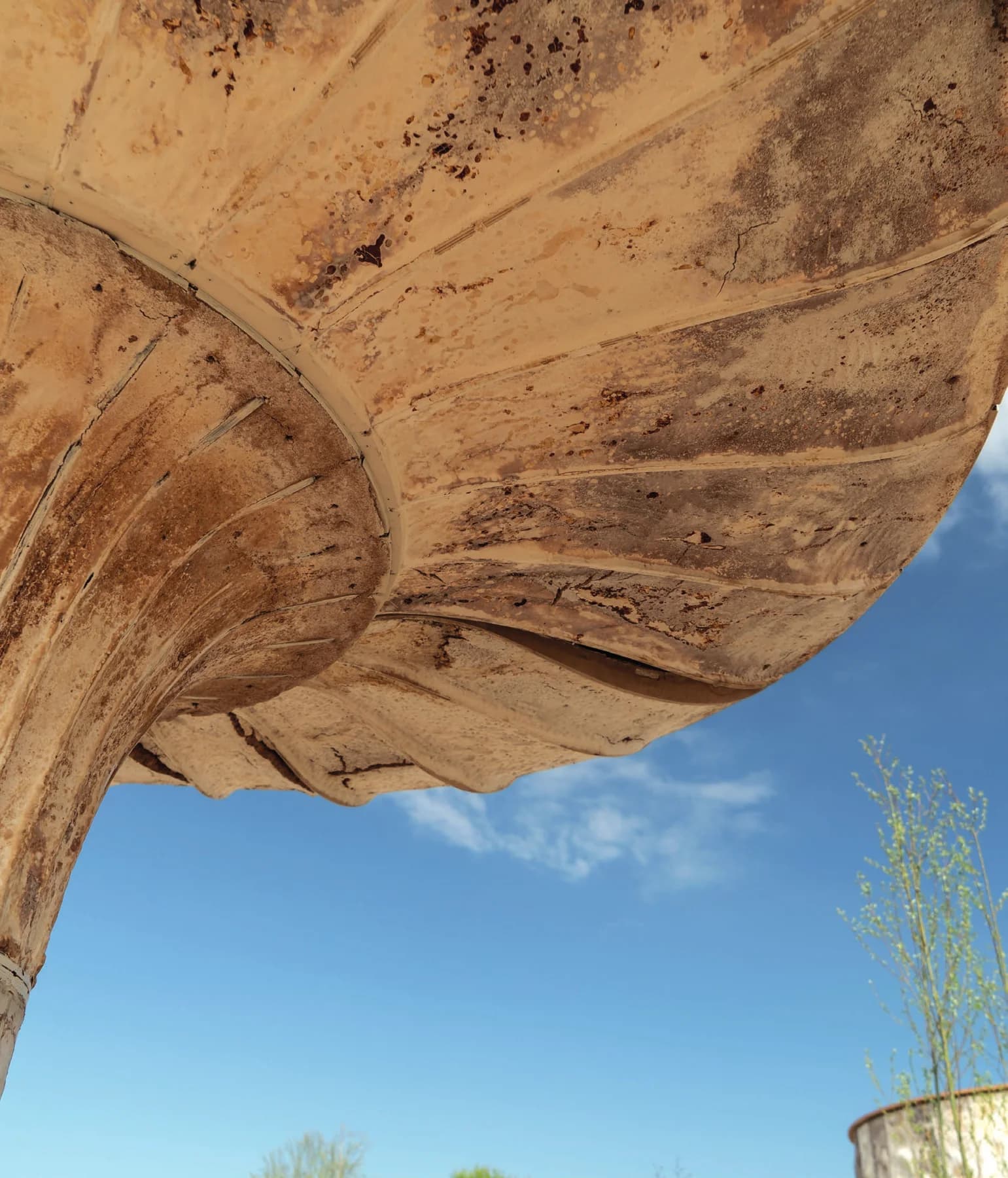
The wooden ribs remain legible in the finished form, in the lines along the columns and the radiating divisions under each cap.
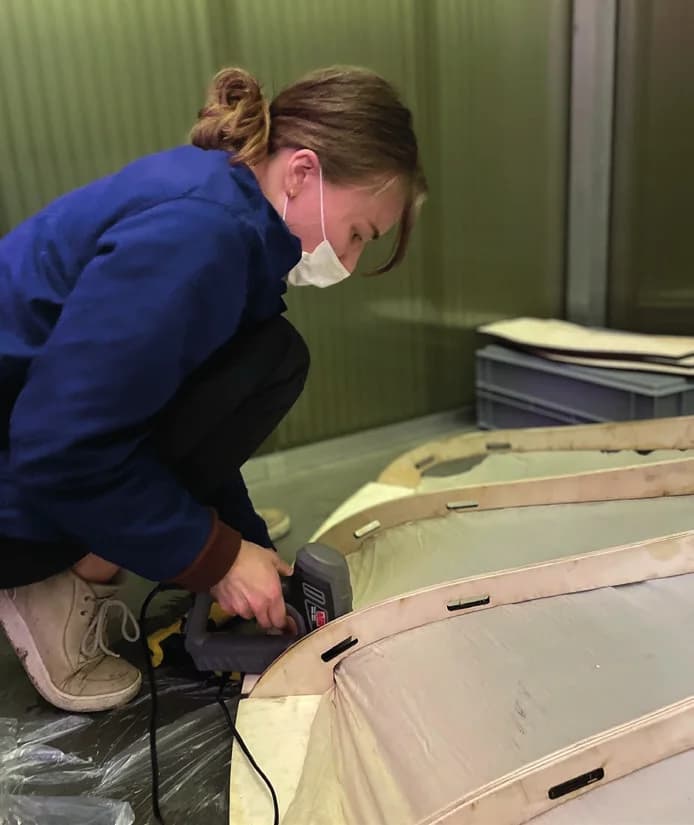
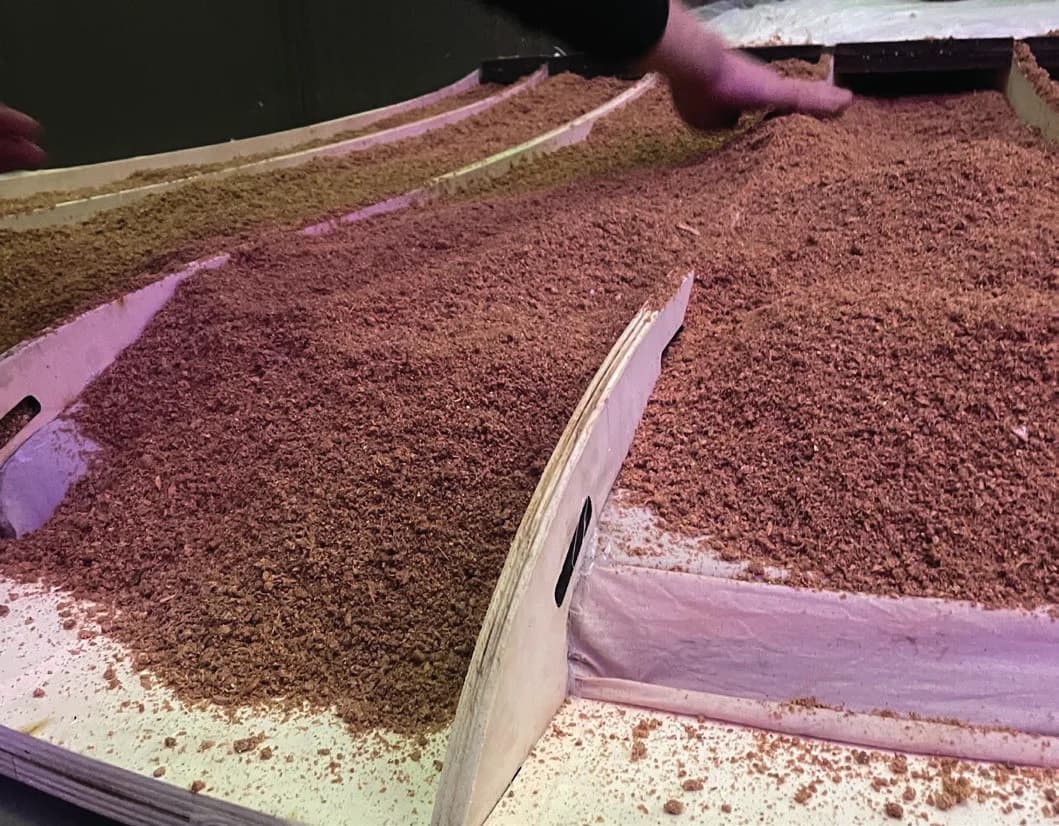
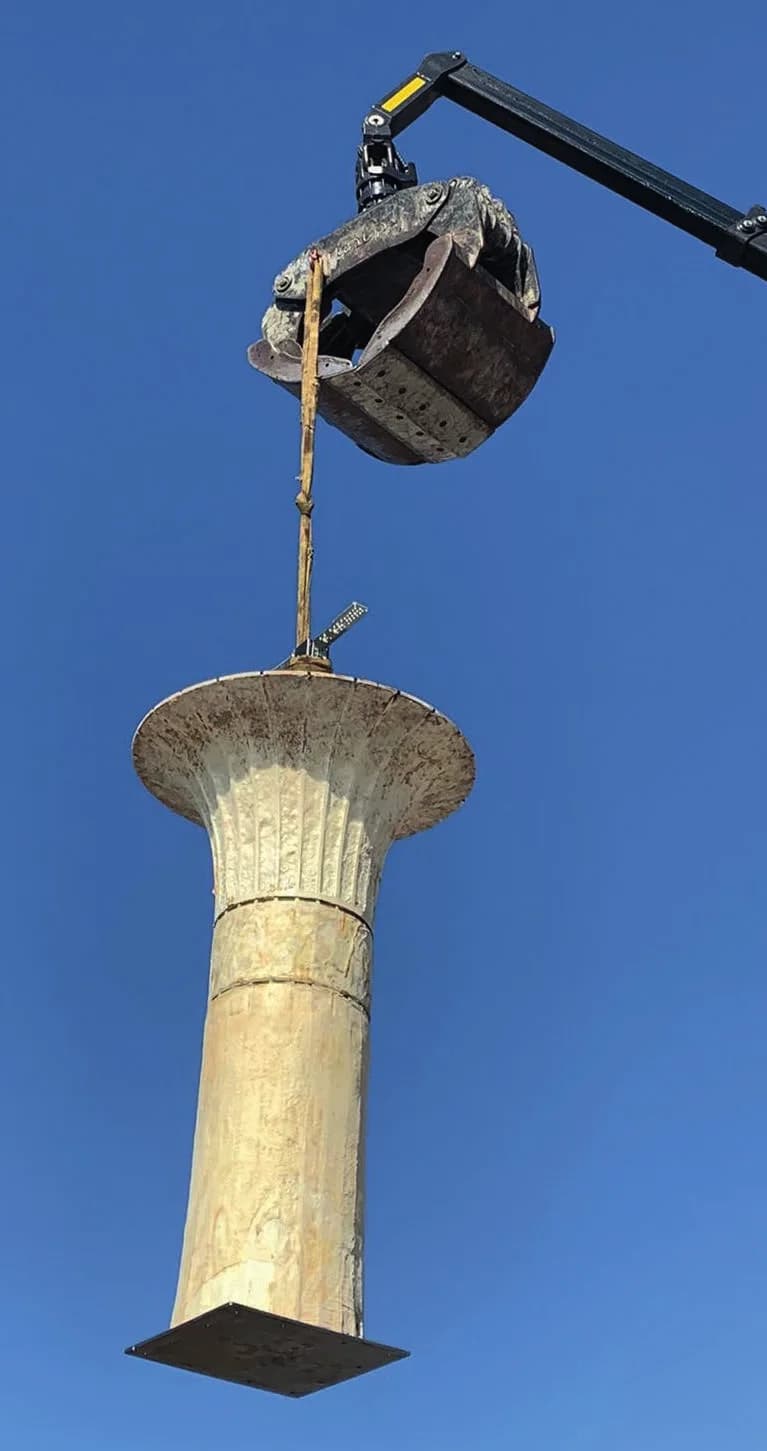
Six months outdoors.
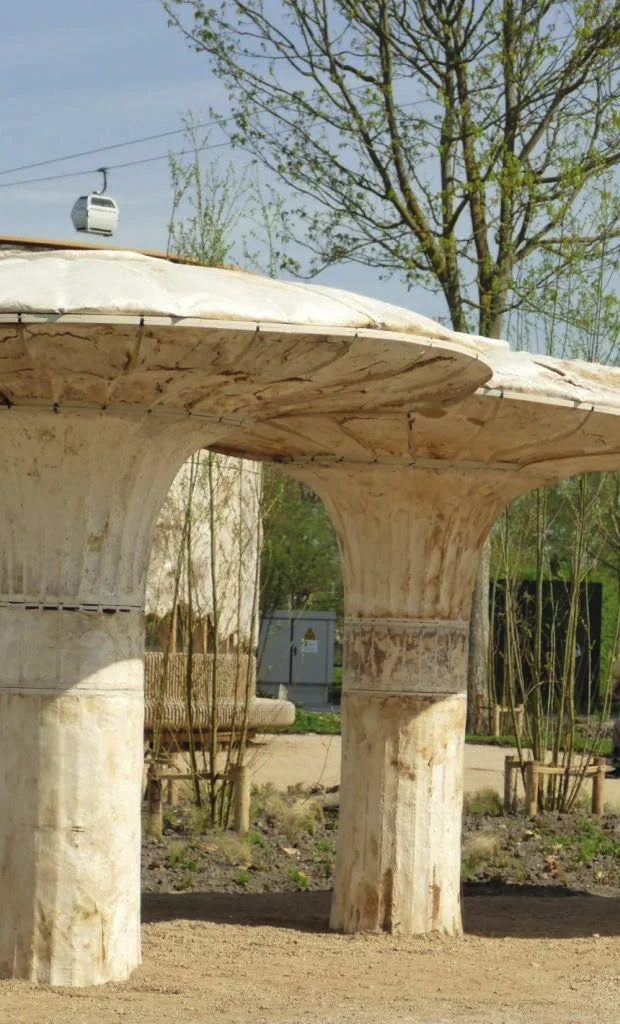
The three structures stood outdoors in Mycelium Parc for the six months of Floriade Expo 2022 in Almere, next to The Growing Pavilion by Biobased Creations. Visitors could stand beneath them and experience the material at the scale of a building rather than as a sample.
Floriade described Living Shelter as a glimpse of what the architecture of tomorrow could be: modern techniques combined with natural materials, exploring how mycelium can be used for construction.